5 Proven Tips for Better Sleep
A good night’s sleep might be one of the most under-appreciated self-care activities out there. And yet recent research shows that 1 in 4 Canadians struggle with poor sleep.1 That is why we are offering 5 proven, research-backed, tips for better sleep.
Sleep has important implications not only for our energy levels but also mental wellness, mood2, stress, cognitive function, and productivity. While occasionally disrupted sleep is something we all experience, repetitive disrupted, non-restful, or insufficient sleep can really catch up with us.
This blog provides actionable and science-backed tips to help you sleep better. It also reviews three important mechanisms that result in sleep challenges – these include reduced sleep drive, irregular scheduling (circadian disruption) and sleep associations (conditioned arousal).
Why sleep is important
Sleep plays an important role in various domains of health. Good sleep promotes energy, mental wellness, cognitive function, and productivity. Sleep plays a crucial role in helping us remember things, pay attention, and stay alert. This is why staying up all night preparing for an exam or presentation is not advised.
Sleep also plays an important role in the physiological repair of our bodies and pain reduction by helping the body restore cells that become depleted during the day.3 Moreover, sleep also supports hormonal balance and metabolism amongst many, many other functions.
What is insomnia?
Before looking at solutions for poor sleep, it is important to identify what insomnia is and isn’t. To be formally diagnosed with insomnia, one must have difficulty falling asleep, staying asleep, or sleeping through the night despite having adequate opportunity for sleep. To be diagnosed, any of these sleep challenges should occur 3 or more nights per week for at least 3 months and either be very distressing or interfere with a person’s functioning in some important way.
Common example of areas of functioning that can be disrupted due to chronically poor sleep include difficulty getting places time, difficulty completing necessary tasks, and increased mood swings/irritability. Insomnia often co-occurs with, and may even proceed, mental health conditions such as anxiety and depression.2
Recent scientific research has demonstrated that approximately 16% of Canadians struggle with insomnia.1 That number climbs to 25% when looking at the proportion of people experiencing dissatisfying sleep, as opposed to a diagnosable sleep disorder. That means about 1 in 4 Canadians are struggling with sleep at any given time.
The truth is, you don’t need to have diagnosable sleep disorder like insomnia to desire better sleep or improved sleep quality. The following tips are suggested for adults who haven’t been sleeping well, are having difficulty falling asleep, or aren’t getting restful sleep. They are starting points that are backed by research and have the potential to improve sleep challenges and optimize your overall well-being.
5 Tips for better sleep
1. Have a consistent routine
When it comes to consistency and better sleep, most people attempt to go to sleep at the same time every night. However, research supports prioritizing waking up at the same time every morning over going to bed at the same time. If you think about it, this makes sense because forcing oneself to fall asleep at a specific time can be much harder than ensuring you wake up at the same time every morning (though this can be hard too!)
Waking up at the same time in the morning, having your meals at about the same time, and having a consistent bedtime routine all help regulate your internal clock and prepare your body for falling asleep. Irregular scheduling of daily activities plays an important role in maintaining chronic sleep challenges and that is why having a consistent routine helps improve sleep.
2. Don’t try to catch up on sleep
It is normal to try to catch up on sleep after a poor night’s rest or after a weekend of late night activities. However, if you are struggling with sleep, trying to “catch up” on sleep will only worsen your sleep challenges. The reason for this is because you actually can’t catch up on sleep. Our bodies have natural mechanisms in place to help make up for lost sleep. This includes spending more time in deeper, more restorative, sleep stages after a night of poor sleep. Going to bed earlier or taking a nap has no positive impact on this.

3. Avoid napping
A top tip for improving your ability to fall asleep and stay asleep is to get rid of naps. If you nap during the day and are having trouble sleeping, then eliminating naps should be a top goal. Our desire to sleep, or our sleep drive, starts to rise from the moment we wake up and progressively builds through the day and into the evening until we are tired enough to go to sleep and stay asleep. Various things can interfere with the natural process of building up our sleep drive and naps are at the top of the list – including short cat naps.
Instead of napping, consider doing something relaxing and calming. This might be some light stretching, going for a walk in nature, having a warm drink, or really any other activity that feels restorative to you. If you fall asleep easily in the day and are finding yourself very tired, we suggest that you not lay in bed (or the couch!) as a soothing activity.
4. Use your bed only for sleep
Many of us use our beds for relaxing activities beyond just sleeping. We may read in bed, browse in bed, reply to emails in bed, chat or be intimate with partners in bed. Generally, this is not problematic and is unlikely to cause sleep disruptions in and of itself. However, if you are someone who is struggling with falling or staying asleep, then the next tip for better sleep is to reserve your bed for just one thing: sleep.
Treating your bed like a sleep shrine reduces the chances that you will unconsciously be associating your bed with wakeful activities (this is a psychological process called stimulus conditioning). Typically, this is not a problem until sleep is affected. But once it is, it’s time to hit the breaks on wakeful activities in bed.
5. Drop sleep aids
Recent research has shown that 29% of Canadians used natural products or over-the-counter (OTC) sleep aids, 16 % used cannabis-derived products, and 10 % used alcohol to sleep in the last 12 months.1 And, yet, sleep aids have a counter-productive effect. While some products may support sleep in the short run, there is a lack of evidence supporting their use. Worse yet, they can interfere with sleep and raise safety concerns.
Consider, for example, an increasing reliance on an over-the-counter medication like Benadryl. While Benadryl will initially make you drowsy, you will need to take increasingly larger amounts of it to fall asleep as your tolerance builds. Ultimately, you will be faced with either taking an unsafe amount of the medication to help you fall asleep, or will have to drop this crutch and try to figure out how to have better sleep without it. Drinking alcohol or using cannabis for sleep is not advised for similar reasons.
Bonus tip for falling asleep
If thinking or worry is keeping you up at night, consider trying a grounding exercise. Grounding activities can also be helpful if you find it difficult to fall asleep despite not really focusing on anything in particular.
Grounding exercises are essentially mental exercises that take us out of our heads and into our present environments. Grounding exercises are one way in which we can practice mindfulness. Mindfulness is purposely paying attention to the present moment in a non-judgmental manner. Included below is a grounding exercise that helps us do just that by bringing our attention to our present surroundings and physical senses.
The following is a grounding exercise that can be used to fall asleep. It is called “5-4-3-2-1 exercise” and was developed by Yvonne Dolan.
Instructions:
Grounding exercise
Notice:
5 things you can hear
5 things you can see (yes, even in the dark)
5 things you can feel (external sensations only)
Notice:
4 things you can hear
4 things you can see
4 things you can feel
Notice:
3 things you can hear
3 things you can see
3 things you can feel
Notice:
2 things you can hear
2 things you can see
2 things you can feel
Notice:
1 things you can hear
1 things you can see
1 things you can feel
If you finish the first iteration of this exercise and you’re still awake, then start right at the top again with 5 things you can sense.
Additional notes about this grounding exercise:
- The sense you start with (hearing, seeing, feeling) does not matter.
- This exercise is meant to be one of observance as opposed to thinking about what is in your environment. See if you can pause and experience the difference between sensing something and thinking about it.
- Focus on simply noticing things in your environment instead of trying to discover something new – it is ok to repeat the things you notice.
Are you still struggling with sleep?
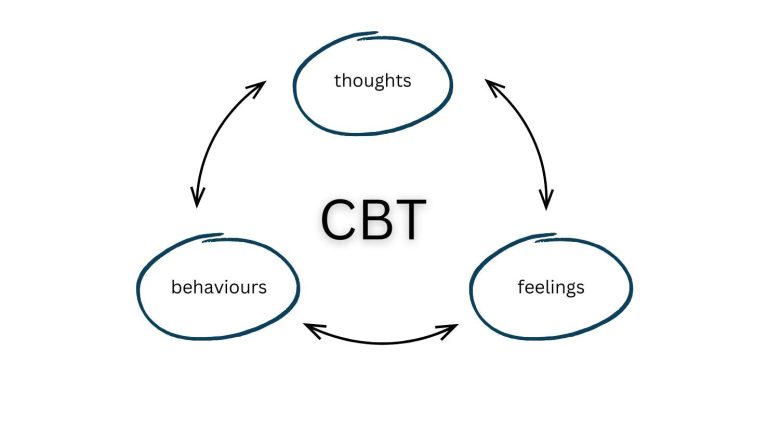
Cognitive Behavioural Therapy for Insomnia (CBT-I)
If you have implemented these tips and are still struggling with sleep or simply want to jump in and receive professional support, we can help!
At Resolve Psychology, we offer Cognitive Behavioural Therapy for Insomnia (CBT-I) which is an evidence-based treatment for sleep challenges. CBT-I goes beyond typical sleep hygiene tips like sleeping in a cool environment or reducing caffeine intake.
CBT-I identifies and problem solves the root of sleep challenges. Indeed, research has consistently demonstrated that CBT-I is more effective than medication or any other psychological treatment or talk therapy that aims to address sleep challenges.
Psychotherapy plays a crucial role in managing sleep and associated challenges. Psychological therapy can be helpful and is recommended when a person is not feeling rested, is impacted emotionally, finds it difficult to manage aspects of their life, or feels their life could be improved by improving sleep.
As a part of CBT-I treatment, we will track your sleep and make recommendations specific to your personal sleep needs. We’ll identify factors that can be interfering with good sleep and work with you to change them so that you can enjoy good quality sleep.
Disclaimer: The information provided above is for informational purposes only. It is not professional psychological advice, a recommendation or endorsement of program/service, nor is it intended to be a substitute thereof. The information shared was deemed accurate at the time of publication, however, this blog is not regularly updated and therefore information may be dated and may not reflect the more current and accurate information over time.